
JUST FOR FUN · OPINION & PREDICTIONS
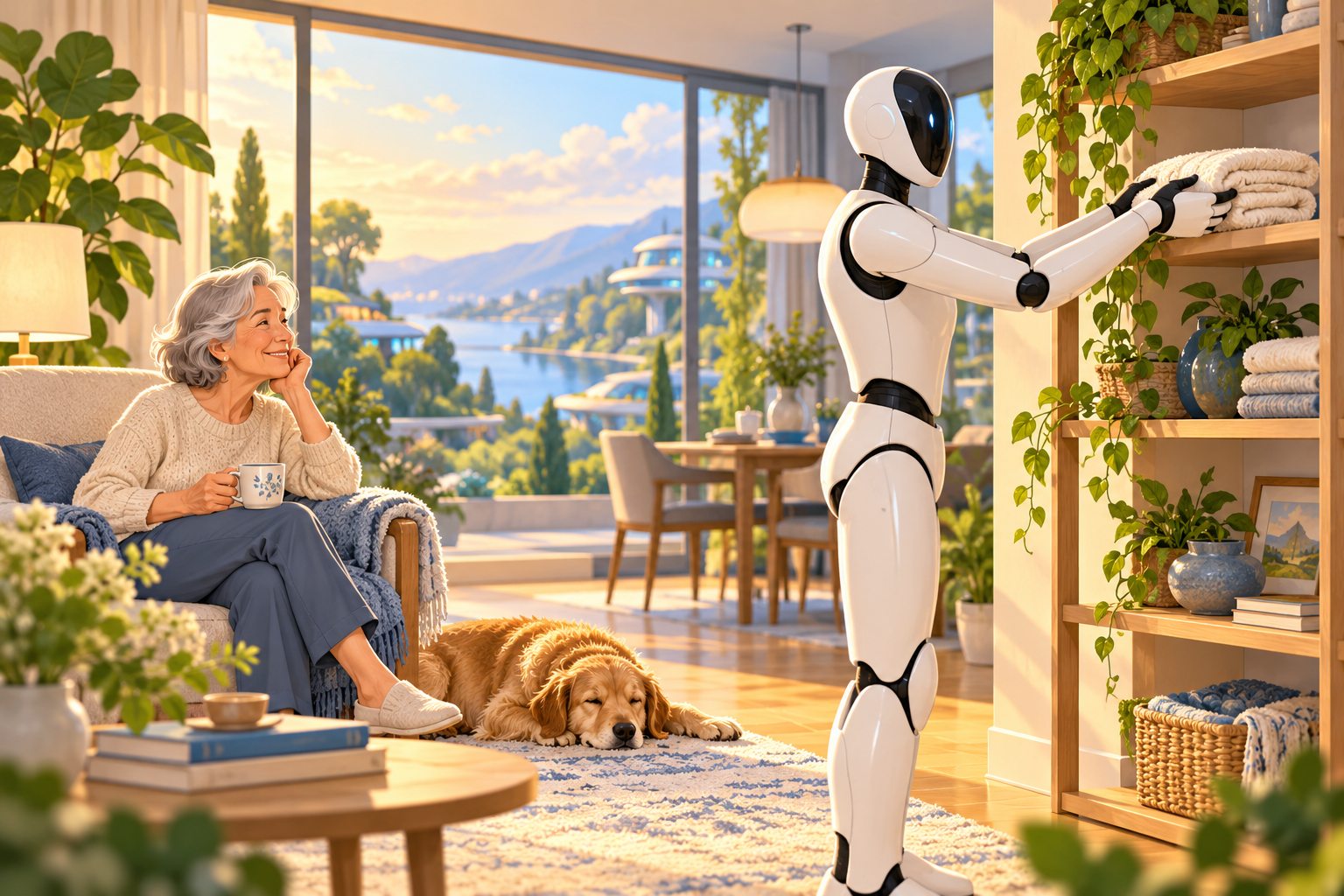
Imagine asking a robot to put away a folded towel while you stay comfortably in your chair. That future is interesting to me. The harder question is whether a robot could do ordinary home tasks safely, reliably, and in a way that actually respects the person living there.
I can imagine useful help with light, repetitive chores. I would need much stronger evidence before trusting a humanoid robot with personal care, lifting a person, or responding to a medical emergency.
What is Tesla Optimus supposed to be?
Tesla describes Optimus as a general-purpose humanoid robot intended to handle unsafe, repetitive, or boring tasks. Its official robotics page discusses the engineering work involved in balance, movement, perception, and interaction with the physical world.
That stated goal is background for this article, not proof that a robot can safely look after an older adult at home. I am not presenting a tested senior-care product, an availability promise, or a purchase recommendation. The scenarios below are my own future-looking ideas.
A good demonstration can make a difficult task look simple. A home adds loose rugs, pets, visitors, narrow doorways, unexpected movements, and personal preferences. Before treating any robot as useful help, I would want to understand what it can do independently and what support it still needs.
Which everyday chores could be useful starting points?
My first choices would be small tasks with clear boundaries: bringing an empty lightweight basket, putting folded towels on an easy-to-reach shelf, or carrying a sealed lightweight item across a clear room. These are possibilities to imagine, not confirmed Optimus home features.
Even a small task needs a sensible stop rule. What if the item is heavier than expected? What if a dog walks into the path? What if a person changes their mind halfway through? I would rather see a robot pause and ask than improvise around a vulnerable person.
| Imagined task | Why it could help | What I would want checked |
|---|---|---|
| Put away light towels | Less repetitive carrying | Clear route and reachable shelf |
| Bring a small household item | Fewer unnecessary trips | Correct item and safe handoff |
| Help organize a simple task list | Less mental clutter | Accurate reminders and easy correction |
Could a robot help someone stay more independent?
Possibly, if it removes chores the person wants help with and leaves their choices intact. Independence is not the same as doing every task alone. It can mean deciding what help you accept and how your day will go.
I would want the owner to control the schedule, the rooms the robot can enter, and the tasks it is allowed to attempt. “No, stop” should work immediately and be easy to say. A large physical stop control would matter more to me than a charming personality.
A useful home helper should also fit around familiar habits. If the person likes to fold their own laundry, the robot should not turn that activity into a problem to solve. Technology should support a meaningful routine rather than reorganize the whole day.
The most valuable robot might be the one that handles a small chore and knows exactly when to stop.
What would I keep outside its role?
I would not plan around a general-purpose robot lifting a person, helping with bathing, managing medication decisions, or taking responsibility for an emergency. Those tasks involve different risks and require appropriate equipment, training, oversight, and evidence.
Nor would I assume a robot prevents falls simply because it can tidy a room. A moving machine can introduce obstacles of its own. A family considering future robotics would need to evaluate the real product and the individual home, not rely on an optimistic picture.
Human connection matters, too. A machine might provide reminders or conversation, but it should not become an excuse to stop calling, visiting, or arranging appropriate personal support. Help with chores and a relationship with another person are different needs.
What privacy questions would a family need to ask?
- What do the cameras and microphones collect?
- Where is that information processed and stored?
- Can a remote operator see inside the home?
- Does the owner know when a person is assisting remotely?
- Can recording be paused, and can certain rooms be excluded?
- What happens if the internet or power fails?
These are questions I would ask of any future household robot. They are not claims about undisclosed Tesla practices. Visitors and caregivers should understand the arrangement as well. A permission decision belongs to the person whose home and daily life are involved.
What is my honest takeaway for seniors today?
I am interested in the idea, especially for repetitive, light household work. But I would judge it by reliable everyday usefulness, safe stopping, clear privacy choices, and dependable human support. A promotional video would be the beginning of that evaluation, not the end.
Meanwhile, simpler technology can already make daily life easier. A familiar remote, clearer phone settings, reliable Wi-Fi, and a good written routine may solve a real frustration right now. See our current services and local service areas if you want practical help with the devices you already own.
Where can you check the original information?
Official sources checked October 22, 2026. Settings and availability can change; use the guide for your device and software version.
Would you like patient help with your technology?
Help With My Tech helps seniors feel more comfortable with phones, tablets, computers, Wi-Fi, and TVs. We explain things clearly, work at your pace, and help you practice the steps that matter to you.
For current service information, visit our pricing page and check our service areas. Then contact Help With My Tech, call 480-463-7030, or send a text. Tell us what is frustrating you, and we will help you take the next step.