
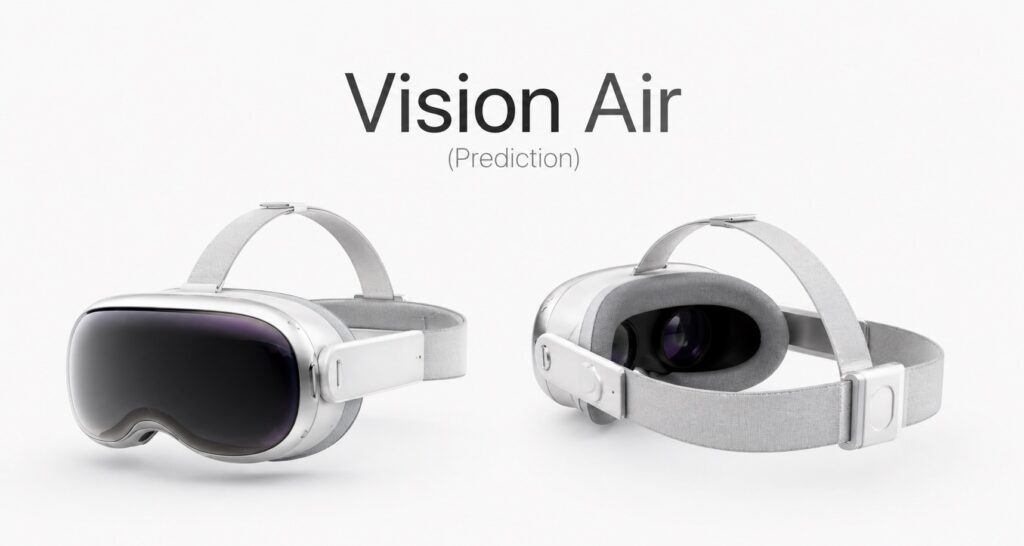
My Prediction for Apple Vision Air: The $999 Headset That Could Finally Make Spatial Computing Normal
Let’s be clear right from the start: Apple has not announced a product called Vision Air. This is a prediction. A guess. A “please Apple, do the obvious thing” kind of blog post.
But honestly, the idea makes a lot of sense.
Apple Vision Pro is amazing, but it is also expensive enough to make your wallet crawl under the bed and hide. At $3,499, it is not exactly an impulse buy. It is more like buying a used car, except the car goes on your face.
That is why I think Apple needs a lower-cost headset for regular people. My guess? Apple Vision Air.
Not Vision Lite. Not Vision SE. Vision Air sounds more Apple. It sounds lighter, simpler, friendlier, and more affordable. And if Apple wants spatial computing to become normal, not just something tech reviewers talk about while sitting in a perfectly lit studio, they need a version for the masses.

What I Think Apple Vision Air Could Be
My prediction is that Apple Vision Air launches sometime around 2027 with a price around $999. I could also see Apple offering an education price around $899 for students and schools.
That price would change everything.
At $3,499, Vision Pro is a premium product for developers, professionals, early adopters, and people who own three espresso machines “for workflow reasons.” At $999, Vision Air becomes something families, students, small businesses, seniors, and everyday users might actually consider.
It would still be expensive, of course. Nobody is pretending $999 is pocket change. But compared to a MacBook, iPad Pro, or iPhone Pro Max, it suddenly enters the normal Apple product conversation.
Instead of asking, “Who in the world is this for?” people may start asking, “Could I use this instead of buying another screen?”
My Predicted Vision Air Specs
To hit a $999 price point, Apple would have to make some cuts. But here is the twist: I think most people would be totally fine with those cuts.
Here is my realistic prediction for a 2027 Apple Vision Air:
- A lighter headset design, possibly around 450 to 550 grams
- Lower-cost micro-OLED or high-end LCD displays
- A wider field of view than most budget headsets, but not quite Vision Pro level
- An Apple A-series or lower-power M-series chip
- Hand tracking, eye tracking, and voice control
- Spatial audio built into the head strap
- External battery pack for better comfort
- Two to three hours of battery life
- Support for Apple Arcade, FaceTime, Safari, Photos, Apple TV, and productivity apps
- Optional prescription lens inserts
- Education-focused apps for classrooms, training, and virtual learning
Would it be as powerful as Vision Pro? No.
Would most people care? Also no.
Most people do not need a headset that can run every professional 3D workflow known to mankind. They need something that is comfortable, fun, useful, and not priced like a family vacation.
The Good: Why Vision Air Could Be a Big Deal
The biggest win would be simple: more people could afford it.
Vision Pro feels like a glimpse into the future. Vision Air could be the product that actually brings that future into the living room.
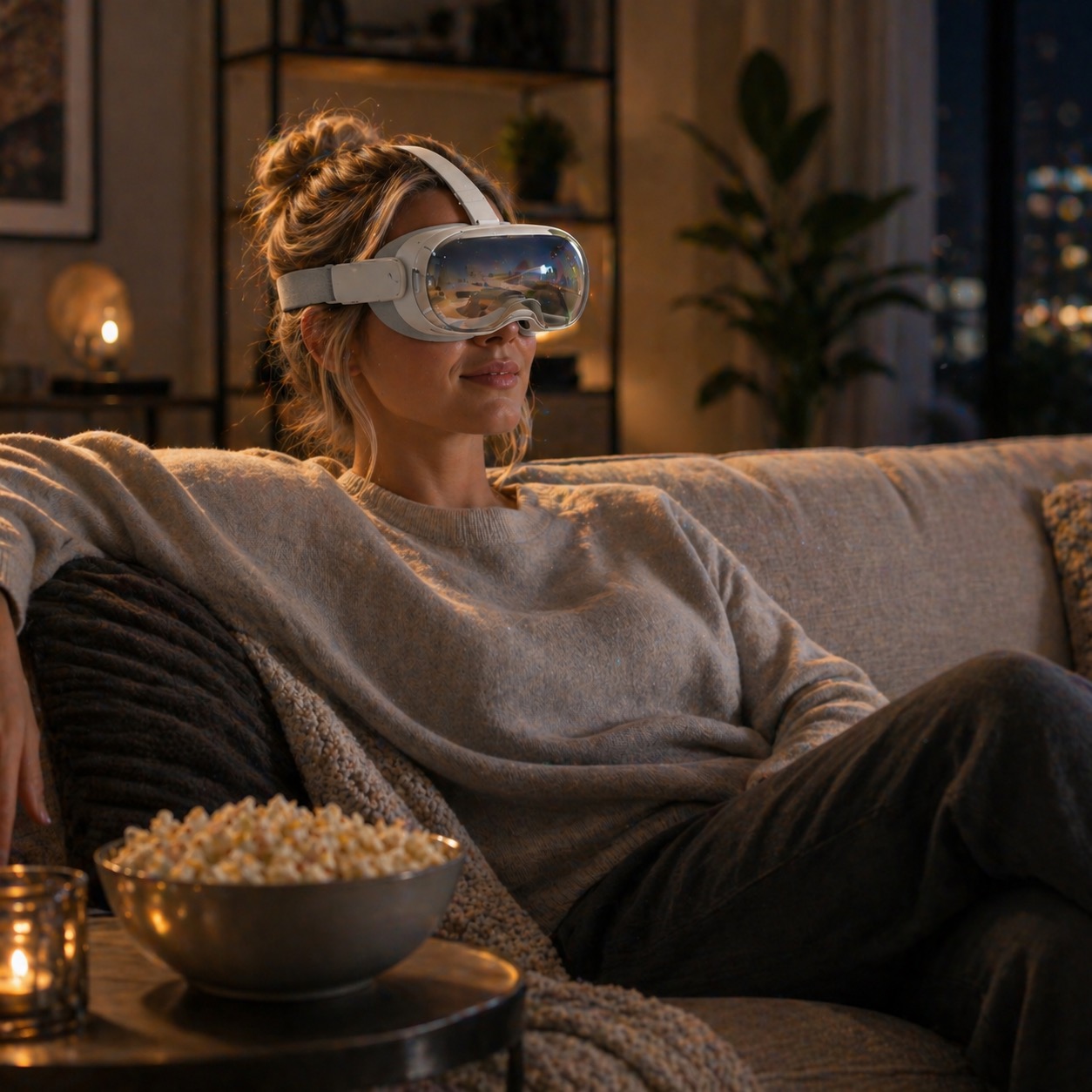
Imagine using it to watch a movie on a giant virtual screen while sitting on the couch. No projector. No giant TV mounted above the fireplace at a neck-breaking angle. Just put on the headset and boom, movie theater.
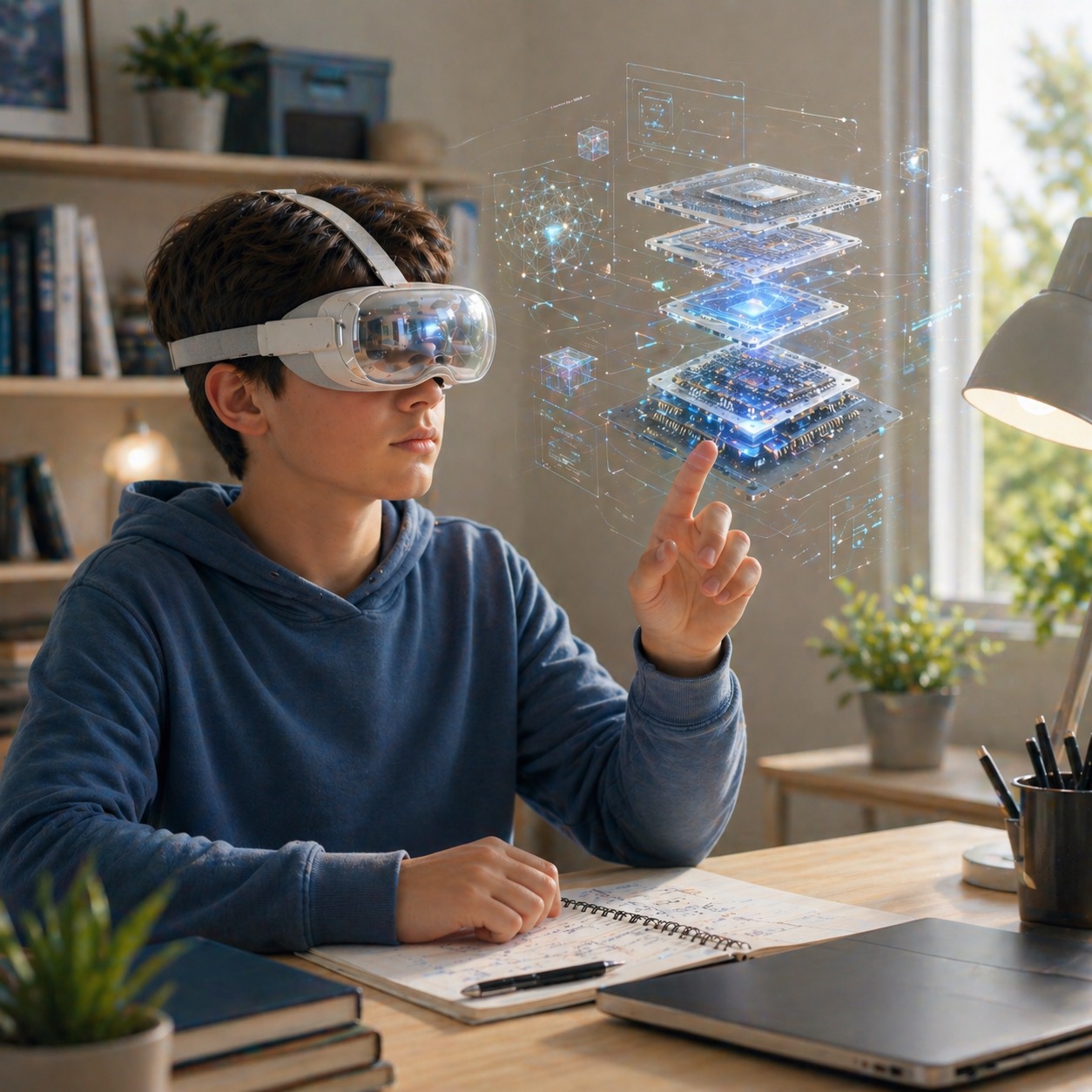
For students, this could be huge. Instead of reading about the solar system, they could walk through it. Instead of looking at a flat diagram of the human heart, they could see it in 3D. Instead of pretending a textbook image is exciting, teachers could actually show something that feels alive.
For seniors, I think Vision Air could be surprisingly useful too. FaceTime calls could feel more personal. Family photos could feel more immersive. Travel videos, Bible studies, tutorials, and virtual museum tours could become easier to enjoy without needing a bunch of complicated equipment.
For small business owners, Vision Air could also be useful for training, virtual meetings, product demos, design previews, and remote support. You could show someone how to fix a setting, walk through a layout, or review a project without needing to crowd around one little screen.
And for regular families? Games, movies, learning apps, fitness, photos, and video calls. That is plenty.
The Bad: It Still Has to Be Worn on Your Face
Here is the obvious issue with any headset: it is still a headset.
No matter how advanced the technology gets, people still have to be willing to put a computer on their face. That is a bigger hurdle than tech companies sometimes want to admit.
Some people do not like wearing anything on their head. Some people wear glasses. Some people get motion sickness. Some people just do not want to look like they are preparing to land a spaceship while sitting in the recliner.
Comfort will matter a lot. If Vision Air is too heavy, too hot, or too awkward, people will use it for a week and then it will become a very expensive decoration next to the printer nobody knows how to connect.
Battery life could also be a downside. If Apple keeps the external battery pack, that helps reduce headset weight, but it also means users have another thing to charge. And lose. And accidentally sit on.
Then there is the app problem. Apple would need enough useful apps to make Vision Air feel worth owning. Movies and FaceTime are nice, but people will need more reasons to keep using it after the “wow” moment wears off.
The Ugly: What Apple Might Cut to Hit $999
This is where it gets interesting.
To make Vision Air affordable, Apple would almost certainly have to cut features from Vision Pro. But I think many of those cuts would not bother average users at all.
First, Apple might use lower-resolution displays. That sounds bad, but if the screens still look sharp enough for movies, browsing, and basic productivity, most people will be fine. Not everyone is inspecting pixels like they are reviewing evidence in a crime lab.
Second, Apple might reduce the number of cameras and sensors. Vision Pro has a very advanced sensor system. Vision Air could probably use fewer sensors and still deliver solid hand tracking, room awareness, and mixed reality features.
Third, Apple might remove the external EyeSight display. That is the feature that shows a version of your eyes on the outside of Vision Pro. It is interesting, but let’s be honest: most people are not buying a headset because the outside world can see a digital version of their eyeballs. That feature can go. We will survive. Somehow.
Fourth, Apple might use simpler materials. Less glass. More aluminum and lightweight plastic. Again, totally fine. If it makes the headset lighter and cheaper, most users will not care that it does not feel like it was carved from a spaceship.
Fifth, Apple may limit some professional features. Maybe Vision Air is not built for heavy 3D modeling, advanced developer testing, or high-end enterprise use. That is okay. The “Air” version does not need to be the monster truck. It needs to be the family SUV.
Who Vision Air Would Be For
I think Vision Air would be for people who are curious about spatial computing but not curious enough to spend $3,499.
It would be for families who want entertainment and learning. It would be for students who could use immersive education tools. It would be for grandparents who want better FaceTime calls and easier access to photos, videos, and guided tutorials.
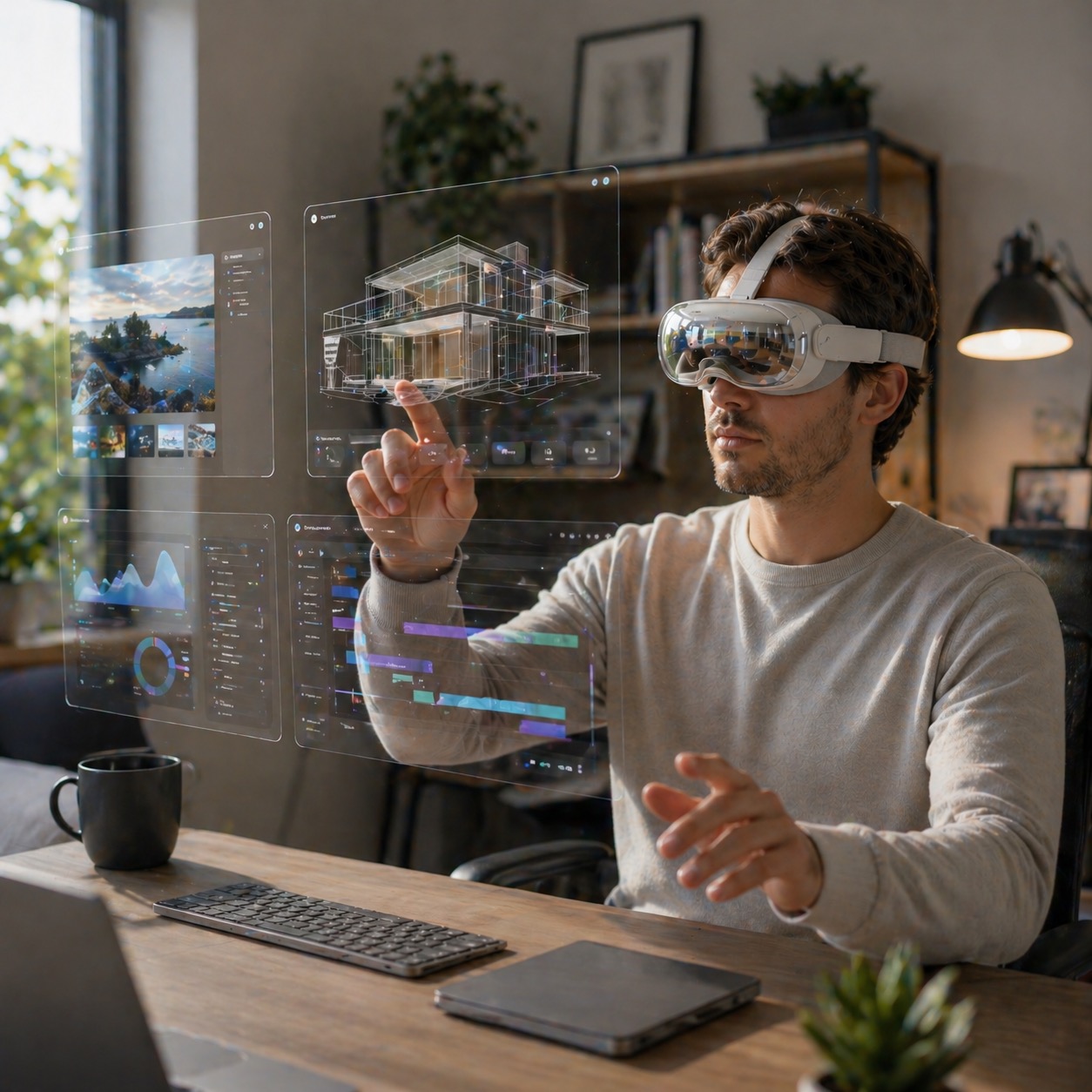
It would also be for people who do not need a giant desktop setup but still want multiple screens. Imagine sitting at a small desk with a keyboard and trackpad, then opening a huge virtual workspace in front of you. That could be incredibly useful for people working from home.
For Help With My Tech customers, I could see this becoming one of those devices people buy because it looks exciting, then they need a little help setting it up. And honestly, that is completely normal. New technology can be amazing and confusing at the same time. That is basically the official motto of modern life. 😊
Real-Life Scenarios Where Vision Air Could Shine
Picture a college student in a small apartment. They do not have room for a big TV or multiple monitors. With Vision Air, they could study, watch lectures, take notes, and relax with a giant movie screen without needing a full entertainment setup.
Now picture a retired couple in Queen Creek. Their kids and grandkids live in another state. With Vision Air, FaceTime could feel more natural, family videos could feel larger and more meaningful, and learning apps could help them get more comfortable with technology.
Picture a small business owner reviewing a website mockup, product design, or training video. Instead of squinting at a laptop, they could spread everything out in a virtual workspace.
And yes, picture the person who just wants to watch a movie while someone else uses the TV. That may not sound revolutionary, but in a house full of people, that is basically a peace treaty.
Would Vision Air Replace the iPad?
Not right away.
The iPad is easy. You pick it up, tap the screen, and you are using it. Vision Air would still require putting something on your face, adjusting the fit, and making sure it is charged.
But for certain things, Vision Air could be better than an iPad. Movies could feel bigger. Learning apps could feel more immersive. Multiple windows could be easier to manage. FaceTime could feel more personal.
So no, I do not think Vision Air would replace the iPad. I think it would become a new category between the iPad, Mac, and Apple TV.
Would Vision Air Be Good for Seniors?
Potentially, yes.
But only if Apple keeps it simple.
Seniors do not need more confusing technology. Nobody does, honestly. But seniors especially need clear menus, easy setup, comfortable controls, and helpful accessibility features.
If Apple makes Vision Air easy to use with voice control, hand gestures, larger text, simple app layouts, and strong accessibility settings, it could be a great device for older adults.
It could help with video calls, entertainment, memories, virtual travel, guided learning, and even tech support. Imagine being able to see what someone is seeing and guide them through a setting step by step. That could be incredibly helpful.
FAQs About My Apple Vision Air Prediction
Has Apple announced Vision Air?
No. This is only a prediction. Apple has not announced a product called Vision Air.
When could Vision Air launch?
My guess would be around 2027. That gives Apple enough time to reduce costs, improve comfort, and build more apps for spatial computing.
How much would Vision Air cost?
My prediction is $999 for the standard version and possibly $899 for education.
Would Vision Air be as powerful as Vision Pro?
No. That would not be the point. Vision Air would likely be lighter, cheaper, and less powerful, but still good enough for everyday use.
What features might Apple cut?
Apple could reduce display resolution, use fewer sensors, remove the external EyeSight display, simplify materials, and limit some professional features.
Would regular people care about those cuts?
Probably not much. Most people care about comfort, price, movies, photos, video calls, games, and ease of use. They are not buying it to inspect pixel density while drinking imported sparkling water.
Could Vision Air be useful for school?
Yes. If priced right, it could be useful for science, history, art, training, virtual field trips, and interactive learning.
Would Help With My Tech help people set up a device like this?
Yes. If a device like Vision Air becomes available, Help With My Tech would be a great fit for helping everyday users set it up, learn the basics, connect it to their Apple account, adjust settings, and understand how to use it without frustration.
At The End Of The Day, Will Apple’s Vision Air Be the Version That Actually Matters
Vision Pro proved that Apple can build an impressive spatial computer. But Vision Air could prove that normal people actually want one.
The future of this category probably does not depend on the most expensive headset. It depends on the headset people can afford, understand, and use in real life.
A $999 Vision Air would not need to be perfect. It would just need to be good enough, comfortable enough, and useful enough to become part of everyday life.
And if Apple can pull that off, spatial computing may finally move from “cool demo” to “yeah, we actually use this.”
That is when things get interesting. 🚀